


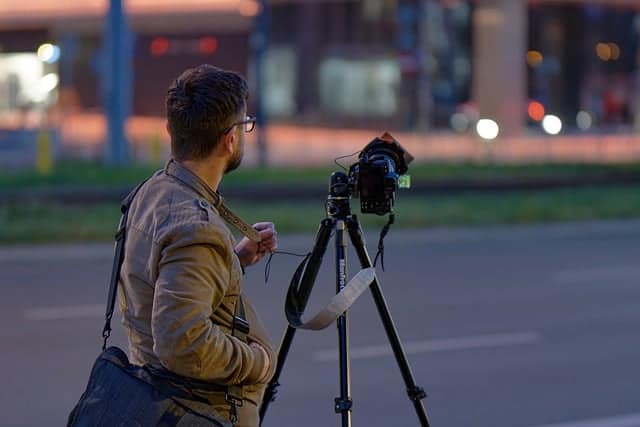
A wedding day happens only once, and every fleeting smile, joyful tear, and intimate glance deserves to be captured perfectly. That’s why wedding photography gear isn’t just about owning fancy equipment — it’s about having the right tools that let your creativity shine while ensuring reliability on one of the most important days of your client’s life.
The wedding industry has evolved dramatically in recent years. According to The Knot’s 2024 Wedding Industry Report, couples spend an average of $2,500–$4,000 on professional photography, expecting both stunning quality and emotional storytelling. This puts tremendous pressure on photographers to deliver consistent, high-quality results — and that starts with using the right gear.
Whether you’re a beginner building your first wedding photography kit or a seasoned pro upgrading for the 2026 season, this comprehensive guide will walk you through everything you need — from cameras, lenses, and lighting to audio, accessories, and workflow setups.
By the end, you’ll know:
- Which camera systems excel in wedding environments
- The best lenses for portraits, ceremonies, and receptions
- How to balance natural and artificial light
- What accessories and backups to never leave behind
- And how to customize your gear for your shooting style
“Your camera is just a tool — it’s how you use it that turns moments into memories.”
— Annie Leibovitz, renowned portrait photographer
In short, your wedding photography gear should empower you to work efficiently, handle unpredictable lighting, and capture timeless, emotion-filled images.
What Is Wedding Photography Gear and Why It Matters
When people hear the term wedding photography gear, they often imagine expensive cameras and flashy lenses. While equipment quality is important, the term actually encompasses everything a photographer uses to capture, enhance, and deliver images at a wedding. This includes cameras, lenses, lighting, audio equipment, tripods, memory cards, bags, and even software for editing and storage.
Why Your Gear Matters in Wedding Photography
Wedding photography is one of the most demanding forms of professional photography. Unlike studio work, you can’t stop the clock and redo a shot. Each moment is irreversible, and your gear plays a pivotal role in ensuring you don’t miss it. Here’s why:
- Reliability in High-Pressure Environments
Weddings are fast-paced and unpredictable. A camera that struggles in low light or a lens that doesn’t autofocus reliably can cost you irreplaceable shots. For example, during evening receptions, you need gear capable of shooting at high ISO without noise, paired with lenses that have wide apertures (f/1.2–f/2.8) for sharp images in dim conditions. - Versatility Across Different Scenarios
A wedding day includes diverse environments: the bright outdoor ceremony, dimly lit churches, bustling receptions, and intimate portrait sessions. Proper wedding photography gear allows you to adapt quickly without compromising image quality. Photographers often carry both prime and zoom lenses to cover wide angles for group shots and close-ups for emotional moments. - Efficiency and Workflow
With multiple moving parts — bride, groom, guests, decorations, lighting, and venues — efficiency is key. Organized gear, such as camera bags with designated compartments, extra batteries, and multiple memory cards, ensures you can move seamlessly from one scene to the next without wasting time. - Creative Expression
Your gear is a tool for storytelling. Different lenses, lighting setups, and even filters allow you to craft a unique visual narrative that matches your client’s vision. For instance, using a 70–200mm telephoto lens for candid moments lets you capture emotion unobtrusively, while a 35mm prime lens excels at wide environmental shots that tell the story of the venue and celebration. - Professionalism and Client Confidence
Clients may not understand technical specs, but they notice professionalism. A well-prepared photographer with reliable gear inspires confidence and ensures smooth workflow, reducing stress and enhancing the overall experience.
Key Components of Wedding Photography Gear
Here’s a breakdown of essential gear categories every wedding photographer should understand:
| Category | Purpose |
| Cameras | Capture high-quality images; reliability and low-light performance matter. |
| Lenses | Determine framing, depth of field, and creative possibilities. |
| Lighting | Ensure proper exposure indoors and at night; includes flashes, softboxes. |
| Audio Equipment | Record vows and speeches if shooting video. |
| Accessories | Batteries, memory cards, straps, bags, cleaning kits for smooth workflow. |
| Editing & Backup Tools | Software and external drives for post-production and secure storage. |
In short, wedding photography gear is more than just equipment — it’s an investment in quality, efficiency, and creative storytelling. Choosing the right gear allows photographers to confidently capture every fleeting moment while providing clients with memories that last a lifetime.
Choosing the Right Camera for Wedding Photography
Your camera is the heart of your wedding photography gear. It’s not just about megapixels — it’s about reliability, low-light performance, speed, and versatility. Selecting the right camera ensures you can capture the fast-paced, emotional, and unpredictable moments that define weddings.
What Type of Camera Is Best for Wedding Photography?
When choosing a camera, photographers typically decide between DSLRs and mirrorless cameras. Both have pros and cons for wedding photography:
DSLR Cameras
Pros:
- Optical viewfinder provides accurate real-time framing.
- Usually longer battery life — essential for full-day weddings.
- Robust build and wide selection of lenses.
Cons:
- Bulkier and heavier to carry around all day.
- Slower autofocus compared to the latest mirrorless models.
Mirrorless Cameras
Pros:
- Compact and lightweight — easier for long weddings.
- Advanced autofocus, often with eye-tracking for portraits.
- Silent electronic shutter available for discreet ceremony shots.
Cons:
- Shorter battery life (requires multiple spare batteries).
- Smaller lens ecosystem for some brands compared to DSLRs.
Pro Tip: Many professional photographers now use hybrid setups, combining one mirrorless and one DSLR for flexibility.
Best Wedding Photography Cameras in 2026
Here’s a breakdown of cameras that perform exceptionally well for weddings in 2026:
| Camera | Type | Key Features | Why It’s Good for Weddings |
| Canon EOS R6 II | Mirrorless | Full-frame, fast autofocus, excellent low-light ISO, dual card slots | Versatile, perfect for ceremonies & receptions |
| Sony A7 IV | Mirrorless | 33MP, eye-tracking AF, silent shutter | Excellent for portraits and candid shots |
| Nikon Z6 II | Mirrorless | Dual card slots, 24.5MP, great high ISO performance | Great for low-light receptions |
| Canon 5D Mark IV | DSLR | Full-frame, reliable, rugged, extensive lens support | Classic choice for professional wedding photographers |
| Fujifilm X-H2 | Mirrorless APS-C | High-resolution, film simulation modes, compact | Lightweight option for documentary-style weddings |
Key Camera Features to Prioritize for Wedding Photography:
- Low-light performance — Weddings often have dimly lit receptions. Look for cameras with high ISO capability and minimal noise.
- Autofocus speed and accuracy — Fast-moving events like walking down the aisle demand precise AF.
- Dual card slots — Essential for backup and redundancy during important moments.
- Silent shutter mode — Allows discreet shooting during ceremonies.
- Ergonomics and weight — You’ll carry your camera all day, so comfort matters.
Backup Camera – Do You Really Need One?
The short answer: Yes. Always.
Even the best camera can fail due to battery issues, memory card errors, or unexpected malfunctions. Most professional wedding photographers carry a secondary camera body, often with a different lens pre-mounted. This ensures:
- Continuous shooting without delays.
- Flexibility to switch focal lengths instantly.
- Redundancy to safeguard against technical failures.
Recommended Backup Cameras:
- Canon EOS R5 (mirrorless) paired with a 24–70mm lens.
- Nikon D850 (DSLR) with a 70–200mm lens.
- Sony A7 III with a 35mm prime lens for fast portraits.
Case Study: A wedding photographer in New York reported that her primary camera stopped working mid-reception. Thanks to her backup mirrorless camera, she captured all critical moments without missing a single shot — proving that backup gear isn’t optional, it’s essential.
A well-chosen camera forms the foundation of your wedding photography gear, enabling you to work confidently in any lighting situation and capture every fleeting moment beautifully.
Best Lenses for Wedding Photography
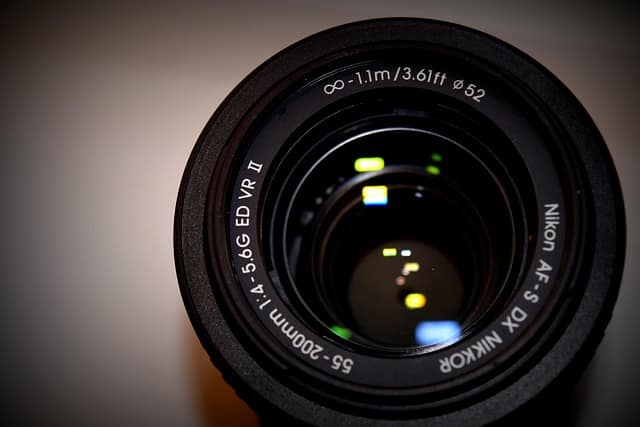
While your camera body is important, lenses are what truly shape your wedding photography gear. They determine how your images look — from intimate close-ups of vows to wide shots of the venue. Choosing the right lenses ensures you can capture emotional, sharp, and cinematic shots throughout the day.
Prime vs Zoom – Which Is Better for Weddings?
Prime Lenses:
- Fixed focal length (e.g., 35mm, 50mm).
- Pros: Extremely sharp, excellent low-light performance, wider apertures (f/1.2–f/1.8) for creamy background blur (bokeh).
- Cons: Less versatile; need to physically move to frame shots.
Zoom Lenses:
- Variable focal length (e.g., 24–70mm, 70–200mm).
- Pros: Versatile, can quickly adapt to different scenes. Ideal for fast-paced events.
- Cons: Slightly slower apertures in some models; heavier.
Pro Tip: Most professional wedding photographers carry a combination of prime and zoom lenses to balance creativity and flexibility.
Must-Have Wedding Photography Lenses
Here’s a breakdown of lenses that every wedding photographer should consider:
| Lens | Focal Length | Best For | Why It’s Essential |
| 35mm f/1.4 | Wide-angle | Environmental portraits, group shots | Captures context and storytelling in tight spaces |
| 50mm f/1.2 | Standard | Classic portraits, detail shots | Natural perspective and beautiful bokeh |
| 85mm f/1.4 | Short telephoto | Close-up portraits, candid moments | Perfect for flattering subject isolation |
| 24–70mm f/2.8 | Zoom | Versatile all-around lens | Covers wide shots and medium telephoto without swapping lenses |
| 70–200mm f/2.8 | Telephoto | Ceremonies, receptions, discreet candids | Allows distant shooting without intruding on moments |
| 100mm–105mm Macro | Macro | Rings, flowers, detail shots | Captures intricate details beautifully |
Lens Recommendations by Brand
- Canon: EF 24–70mm f/2.8L II, RF 50mm f/1.2L
- Nikon: Z 70–200mm f/2.8, Nikkor 35mm f/1.4
- Sony: FE 85mm f/1.4 GM, FE 24–70mm f/2.8 GM
- Fujifilm: XF 35mm f/1.4, XF 16–55mm f/2.8
Case Study:
A wedding photographer in Los Angeles used a 70–200mm f/2.8 lens exclusively during a beach ceremony to capture candid moments from a distance. Guests didn’t even notice, yet the photographer captured stunning close-ups of emotional reactions — a clear example of how telephoto lenses elevate wedding photography.
Tips for Using Lenses in Weddings
- Match lens to location: Use wide-angle lenses indoors where space is tight, and telephoto lenses outdoors or in large venues.
- Plan for low-light conditions: Fast prime lenses (f/1.2–f/1.8) are essential for dimly lit churches or reception halls.
- Carry at least two lenses: One zoom for flexibility and one prime for portraits or cinematic shots.
- Mind lens changes: Keep lens swaps minimal during critical moments to avoid missing shots.
Summary:
Lenses are the most important part of your wedding photography gear after your camera body. A carefully chosen combination of primes and zooms allows you to adapt to any scenario, capture emotional storytelling, and deliver high-quality, professional images consistently.
Wedding Photography Lighting Equipment
Lighting is one of the most critical components of wedding photography gear. Even the best camera and lenses can’t compensate for poor lighting. Weddings often involve diverse lighting conditions — from bright outdoor ceremonies to dimly lit receptions — making the right lighting equipment essential for capturing professional-quality images.
Natural vs Artificial Lighting
Understanding how to work with both natural and artificial light is key:
Natural Light:
- Ideal for daytime ceremonies and outdoor portraits.
- Soft, diffused light from the golden hour (1–2 hours before sunset) produces warm, flattering tones.
- Challenges: Direct sunlight can cause harsh shadows, while overcast skies may require supplemental lighting.
Artificial Light:
- Includes flashes, strobes, LED panels, and reflectors.
- Necessary for dimly lit indoor spaces, night receptions, and dramatic portrait effects.
- Offers control over direction, intensity, and quality of light, ensuring consistent results.
Tip: The best wedding photographers combine natural and artificial lighting, balancing both to create a cinematic feel without overexposing or underexposing key moments.
Best Lighting Gear for Weddings
Here’s a breakdown of essential lighting tools for wedding photography:
| Equipment | Purpose | Recommended For |
| On-Camera Flash | Fill shadows, bounce light for natural look | Indoor ceremonies, reception dancing |
| Off-Camera Flash/Strobe | Adds depth, separates subjects from background | Portraits, formal group shots |
| Softboxes and Umbrellas | Diffuse harsh light, create soft, even lighting | Indoor portraits, table shots |
| Reflectors | Bounce sunlight or artificial light onto subjects | Outdoor portraits, ceremony shots |
| Continuous LED Lights | Video shoots, hybrid photography setups | Vlogs, live streaming, ceremony coverage |
Lighting Tips for Wedding Photographers
- Bounce Your Flash: Avoid harsh shadows by bouncing flash off walls or ceilings.
- Use Modifiers: Softboxes and umbrellas create soft, flattering light for portraits.
- Adjust Color Temperature: Match artificial lights with ambient lighting to maintain natural skin tones.
- Low-Light Strategies: Use lenses with wide apertures (f/1.2–f/2.8) and cameras with excellent high ISO performance.
- Pre-Light Key Areas: Scout venues ahead of time to identify tricky lighting conditions.
Case Study:
A wedding photographer in Chicago used a combination of off-camera flash with softboxes for indoor portraits and a reflector for outdoor group shots. The result was a consistent, professional look throughout the day, demonstrating how the right lighting gear elevates wedding photography.
Key Takeaway
Lighting isn’t just about illuminating a scene — it’s about creating mood, depth, and emotion. The right combination of natural and artificial lighting, along with well-chosen equipment, ensures that your wedding photography gear can handle any scenario, from sunlit ceremonies to candlelit receptions.
Wedding Photography Accessories You Shouldn’t Skip
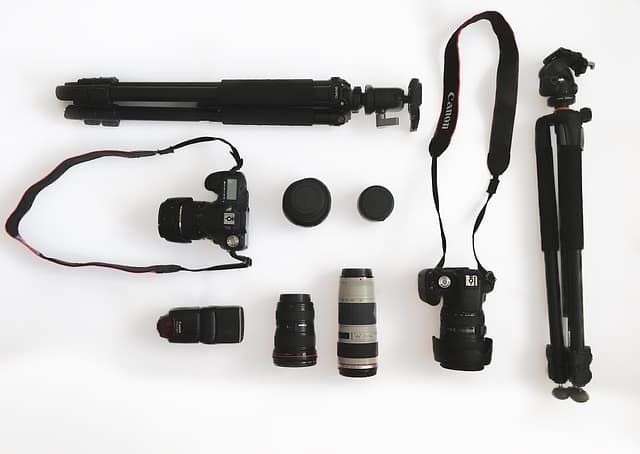
While cameras, lenses, and lighting are the stars of your wedding photography gear, accessories often make the difference between a smooth, professional shoot and a chaotic day. Accessories improve efficiency, protect your equipment, and ensure you never miss a critical moment.
Essential Accessories
Here’s a list of must-have accessories for every wedding photographer:
- Memory Cards
- High-speed cards (UHS-II or CFexpress) allow rapid shooting and fast file transfers.
- Always carry multiple cards for redundancy — a single failure can ruin a shoot.
- High-speed cards (UHS-II or CFexpress) allow rapid shooting and fast file transfers.
- Extra Batteries and Chargers
- Weddings are full-day events; running out of battery mid-ceremony is unacceptable.
- Consider external battery packs for mirrorless cameras with shorter battery life.
- Weddings are full-day events; running out of battery mid-ceremony is unacceptable.
- Tripods and Monopods
- Monopods provide stability in tight spaces without being intrusive.
- Tripods are useful for reception shots, group photos, or long exposure night photography.
- Monopods provide stability in tight spaces without being intrusive.
- Camera Straps and Harnesses
- Ergonomic straps reduce fatigue during long shoots.
- Harnesses allow you to carry two cameras for fast lens switching.
- Ergonomic straps reduce fatigue during long shoots.
- Camera Bags and Cases
- Keep gear organized and accessible.
- Waterproof or padded bags protect against accidents, weather, and dust.
- Keep gear organized and accessible.
Optional but Highly Useful Add-ons
- Lens Filters
- UV or polarizing filters help control glare and enhance colors.
- UV or polarizing filters help control glare and enhance colors.
- Cleaning Kits
- Dust and smudges are inevitable; a cleaning kit prevents image quality loss.
- Dust and smudges are inevitable; a cleaning kit prevents image quality loss.
- Rain Covers and Weather Protection
- Weddings happen in any weather; protective gear ensures uninterrupted shooting.
- Weddings happen in any weather; protective gear ensures uninterrupted shooting.
- Portable Storage Drives and Laptops
- Back up images on-site to prevent data loss.
- Useful for tethered shooting or quick client previews.
- Back up images on-site to prevent data loss.
Pro Tips for Managing Accessories
- Pack Smart: Use color-coded or labeled pouches to quickly identify batteries, cards, and filters.
- Redundancy Matters: Always carry spare essentials — memory cards, batteries, and cables.
- Accessible Placement: Keep frequently used items in external pockets or quick-access pouches.
- Lightweight Setup: Avoid overloading yourself — choose compact, multifunctional accessories.
Case Study:
During a rainy outdoor wedding in Seattle, a photographer used rain covers for cameras and lenses while maintaining fast shooting. By planning for weather and organizing essential accessories efficiently, all critical shots were captured safely and without stress.
Key Takeaway
Accessories are the unsung heroes of your wedding photography gear. They enhance efficiency, protect your equipment, and allow you to focus on creativity rather than logistics. Without these essentials, even the best cameras and lenses may fail you on a busy wedding day.
Audio and Video Gear for Wedding Coverage
Many modern wedding photographers now offer hybrid services, capturing both photos and video. This requires additional audio and video gear as part of your wedding photography kit to ensure every vow, speech, and emotional moment is perfectly documented.
Why Audio and Video Gear Matters
Even the most cinematic video footage loses impact if the audio is poor or inaudible. For weddings:
- Vows and speeches must be crystal clear.
- Background music and ambient sounds enhance storytelling.
- Hybrid photographers need synchronized audio for smoother editing.
“Video without audio is like a photograph without emotion — it tells the story but misses the feeling.”
— Hybrid wedding photographer, Sarah Thompson
Essential Audio Gear for Weddings
| Equipment | Purpose | Tips |
| Wireless Lavalier Mics | Capture clear speech from the couple or officiant | Place close to the speaker; avoid obstructions |
| Handheld Wireless Mics | For speeches and toasts | Ideal for guests or interactive moments |
| Audio Recorders | Backup recording for safety | Always record separately from camera |
| Shotgun Microphones | Capture directional sound, reduce ambient noise | Use on cameras or boom poles |
Essential Video Gear for Hybrid Coverage
- Camera for Video
- Many modern mirrorless and DSLR cameras can shoot 4K video.
- Ensure your camera has good low-light performance and fast autofocus for moving subjects.
- Many modern mirrorless and DSLR cameras can shoot 4K video.
- Gimbals and Stabilizers
- Essential for smooth cinematic shots during the ceremony, reception, or first dance.
- Essential for smooth cinematic shots during the ceremony, reception, or first dance.
- Continuous Lighting
- LED panels or softboxes provide consistent lighting for video, especially in dim venues.
- LED panels or softboxes provide consistent lighting for video, especially in dim venues.
- Memory and Storage
- Video files are large; carry multiple high-capacity memory cards or external SSDs for backup.
- Video files are large; carry multiple high-capacity memory cards or external SSDs for backup.
Tips for Successful Audio and Video Capture
- Test Equipment Before the Event:
- Check audio levels, camera settings, and lighting before the ceremony starts.
- Check audio levels, camera settings, and lighting before the ceremony starts.
- Use Backup Audio Sources:
- Always record audio separately as a backup to your camera mic.
- Always record audio separately as a backup to your camera mic.
- Coordinate with Venue:
- Understand the venue’s audio system to avoid interference or poor acoustics.
- Understand the venue’s audio system to avoid interference or poor acoustics.
- Plan Camera Angles:
- Combine wide, medium, and close-up shots for dynamic storytelling.
- Combine wide, medium, and close-up shots for dynamic storytelling.
Case Study
A hybrid wedding photographer in Austin used dual mirrorless cameras with a shotgun mic and wireless lavalier system during a full-day wedding. The result: flawless audio of vows and speeches, cinematic video of the ceremony, and seamless integration of photos and video in the final delivery. This example demonstrates how adding audio and video gear to your wedding photography kit enhances the overall quality of the service.
Key Takeaway
Even if your main focus is photography, including audio and video gear in your wedding photography setup ensures you can offer hybrid services. Clear audio, smooth video, and reliable equipment expand your capabilities, enhance client satisfaction, and position you as a versatile wedding professional.
Wedding Photography Gear Setup and Workflow
Having the best wedding photography gear is only part of the equation. How you organize, pack, and use your gear throughout a wedding day determines whether your shoot is smooth or chaotic. An efficient setup and workflow allow you to focus on creativity while ensuring you never miss a critical moment.
How to Pack and Organize Your Gear for a Wedding
- Create a Gear Checklist
- Include cameras, lenses, lighting, batteries, memory cards, tripods, and accessories.
- Organize by priority to ensure you grab essential items first.
- Include cameras, lenses, lighting, batteries, memory cards, tripods, and accessories.
- Use Modular Camera Bags
- Compartments for each lens and accessory prevent damage and allow quick access.
- Keep frequently used gear, like your 24–70mm lens or batteries, in external pockets.
- Compartments for each lens and accessory prevent damage and allow quick access.
- Pre-Mount Lenses
- Prepare two camera bodies with different lenses (e.g., one with a wide-angle lens, one with a telephoto lens) to reduce mid-shoot lens changes.
- Prepare two camera bodies with different lenses (e.g., one with a wide-angle lens, one with a telephoto lens) to reduce mid-shoot lens changes.
- Label Your Accessories
- Color-coded pouches or tags for batteries, memory cards, and chargers save time.
- Color-coded pouches or tags for batteries, memory cards, and chargers save time.
- Weather Protection
- Include rain covers and lens cloths, especially for outdoor weddings.
- Include rain covers and lens cloths, especially for outdoor weddings.
Managing Gear During the Wedding
- Carry Minimal Gear on Your Body: Use harnesses or straps to keep essential gear accessible without fatigue.
- Designate a Gear Station: A table or bag where backup batteries, flashes, and memory cards are stored for quick swaps.
- Check Gear Between Events: After the ceremony, ensure memory cards have enough space and batteries are fully charged for reception coverage.
Workflow Tips for Wedding Days
- Scout the Venue in Advance:
- Identify lighting conditions, power sources, and ideal photo locations.
- Identify lighting conditions, power sources, and ideal photo locations.
- Plan Key Shots:
- Create a timeline for ceremony, portraits, family shots, and reception events.
- Create a timeline for ceremony, portraits, family shots, and reception events.
- Use Tethering for Important Moments:
- Tethering cameras to a laptop or tablet can help preview shots and ensure correct exposure, focus, and composition.
- Tethering cameras to a laptop or tablet can help preview shots and ensure correct exposure, focus, and composition.
- Backup Frequently:
- Transfer images to external drives or cloud storage whenever possible to prevent data loss.
- Transfer images to external drives or cloud storage whenever possible to prevent data loss.
- Delegate if Possible:
- An assistant can carry extra gear, manage lighting, or switch lenses, improving your efficiency and reducing stress.
- An assistant can carry extra gear, manage lighting, or switch lenses, improving your efficiency and reducing stress.
Case Study
A New York wedding photographer packed two cameras pre-mounted with prime and zoom lenses, extra flashes, and multiple battery packs in a modular bag system. During the ceremony, a battery died unexpectedly, but the organized backup system allowed an instant replacement, ensuring continuous shooting without missing a single moment. This demonstrates the importance of both gear setup and workflow for a flawless wedding day.
Key Takeaway
Efficient organization, smart packing, and a clear workflow are as important as your wedding photography gear itself. By preparing carefully and managing your equipment strategically, you can focus on capturing the emotional, unforgettable moments that make weddings so special.
Beginner vs Professional Wedding Photography Gear
Choosing the right wedding photography gear depends largely on your experience level, budget, and the type of weddings you plan to shoot. Beginners and professionals often have very different setups, each tailored to their specific needs and workflow.
Wedding Photography Gear for Beginners
For those just starting out, the goal is to balance affordability, reliability, and versatility without being overwhelmed by complexity.
Essential Beginner Gear:
| Equipment | Recommendation | Why It Works for Beginners |
| Camera | Canon EOS Rebel T8i or Nikon D5600 | Lightweight, user-friendly, good low-light performance |
| Lens | 18–55mm kit lens + 50mm f/1.8 | Covers wide and portrait shots without multiple lenses |
| Flash | On-camera speedlight | Affordable and effective for indoor lighting |
| Accessories | Extra batteries, memory cards, camera bag | Basic essentials for reliability |
| Tripod/Monopod | Compact, lightweight option | Stabilizes shots, especially in low light |
Tips for Beginners:
- Start with a simple kit and focus on learning lighting and composition before upgrading.
- Rent high-end lenses or cameras for special weddings to experiment without huge investment.
- Use online tutorials or local workshops to practice using your gear in real wedding scenarios.
Quote: “Start small, master the basics, then gradually invest in professional gear as your skills and client base grow.” — Emily Carter, wedding photographer
Professional Wedding Photography Gear Setup
Professional photographers require high-end, reliable, and versatile gear capable of handling any situation. Professionals often shoot multiple weddings per week and need equipment that performs flawlessly under pressure.
Essential Professional Gear:
| Equipment | Recommendation | Why Professionals Use It |
| Camera | Canon EOS R5 / Nikon Z9 / Sony A7 IV | Excellent low-light, fast autofocus, dual card slots |
| Lenses | 24–70mm f/2.8, 70–200mm f/2.8, 35mm f/1.4 | Covers wide, telephoto, and prime portrait needs |
| Lighting | Off-camera flashes, softboxes, reflectors | Control over lighting in all environments |
| Backup Gear | Secondary camera body, extra lenses, memory | Ensures uninterrupted shooting |
| Accessories | Tethering setup, rain covers, harnesses | Efficiency and protection during long weddings |
Professional Tips:
- Always carry backup equipment — a professional wedding cannot afford downtime due to gear failure.
- Invest in fast lenses and reliable flashes to handle low-light receptions without compromising quality.
- Organize your gear meticulously to move quickly between ceremonies, portraits, and receptions.
Key Differences Between Beginner and Professional Gear
| Aspect | Beginner Setup | Professional Setup |
| Budget | $1,000–$2,500 | $5,000–$15,000+ |
| Cameras | Entry-level DSLR or mirrorless | High-end mirrorless/full-frame DSLR |
| Lenses | 1–2 versatile lenses | Multiple primes + zooms |
| Lighting | On-camera flash | Advanced off-camera lighting |
| Accessories | Basic essentials | Comprehensive kit with backups |
| Workflow | Simple, slower-paced | Fast, efficient, highly organized |
Key Takeaway
Your wedding photography gear should align with your skill level and the scale of weddings you shoot. Beginners can start with affordable, versatile kits and gradually invest in professional gear as experience and client demand grow. Professionals, on the other hand, rely on high-end, reliable equipment and backups to ensure flawless results under pressure.
Renting vs Buying Wedding Photography Equipment
When building your wedding photography gear, one of the most important decisions is whether to buy or rent equipment. Both approaches have advantages and drawbacks, and your choice depends on budget, shooting frequency, and the type of weddings you cover.
When to Buy Wedding Photography Gear
Buying gear makes sense if you:
- Shoot weddings regularly and rely on your equipment daily.
- Want full control over your gear and its availability.
- Prefer to customize your kit and invest in long-term quality.
Pros of Buying:
- Immediate Access: Your camera, lenses, and accessories are always ready.
- Long-Term Cost Efficiency: Over time, purchasing pays off compared to repeated rental fees.
- Familiarity with Gear: You’ll know your equipment intimately, which reduces errors during shoots.
- Customization: You can select specific lenses, flashes, and accessories that suit your style.
Cons of Buying:
- High upfront cost, especially for professional-grade cameras and lenses.
- Gear can become outdated as technology evolves.
- Maintenance and storage are your responsibility.
When to Rent Wedding Photography Gear
Renting is ideal if you:
- Shoot weddings occasionally or seasonally.
- Need specialized gear for certain venues or unique shots.
- Want to try high-end equipment before committing to purchase.
Pros of Renting:
- Lower Initial Investment: You pay only for the days you need the gear.
- Access to Premium Equipment: Try professional-grade cameras and lenses without buying.
- Flexibility: Rent gear specific to a wedding’s style or venue.
- No Maintenance Hassles: Rental companies maintain equipment for you.
Cons of Renting:
- Availability may be limited during peak wedding seasons.
- Repeated rental fees can add up if you shoot frequently.
- Limited time for testing and adjusting gear before the wedding.
Cost Comparison Example
| Gear | Buying Cost | Rental Cost (per wedding) | Break-Even Point |
| Canon EOS R6 + 24–70mm | $3,500 | $150 | ~24 weddings |
| 70–200mm f/2.8 Lens | $2,000 | $100 | ~20 weddings |
| Lighting Kit | $800 | $50 | ~16 weddings |
Insight: If you shoot fewer than 15–20 weddings per year, renting high-end gear may be more cost-effective. Professionals shooting 30+ weddings annually typically benefit from buying their gear.
Recommended Rental Platforms
- Lensrentals.com – Wide selection of cameras, lenses, and lighting gear.
- BorrowLenses.com – Offers both short-term and long-term rental options.
- Local Camera Stores – Many photography shops rent equipment with pickup and return flexibility.
Key Takeaway
Deciding whether to rent or buy wedding photography gear depends on your shooting frequency, budget, and the type of weddings you cover. Beginners or part-time photographers may benefit from renting to access premium equipment affordably, while full-time professionals often invest in buying high-quality gear for long-term reliability and efficiency.
How to Choose the Right Wedding Photography Gear for Your Style
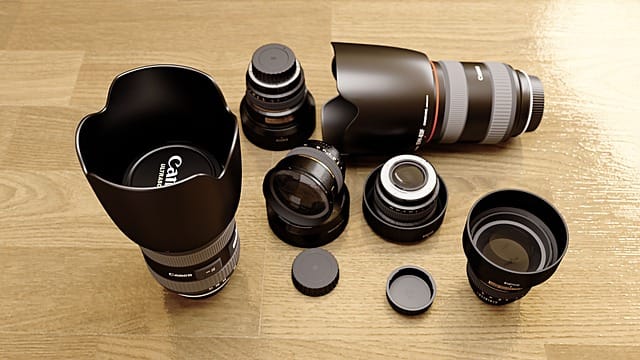
Not all wedding photography gear suits every photographer. Your style, shooting approach, and client expectations should guide your equipment choices. Selecting gear that complements your workflow ensures efficiency, creativity, and consistent results.
Identify Your Photography Style
Before investing in gear, determine your primary wedding photography style:
- Photojournalistic / Documentary
- Captures candid moments, storytelling-focused.
- Gear Priority: Fast prime lenses (35mm, 50mm), lightweight mirrorless cameras, minimal lighting gear.
- Captures candid moments, storytelling-focused.
- Classic / Traditional
- Posed portraits, structured family and couple shots.
- Gear Priority: Versatile zoom lenses (24–70mm, 70–200mm), off-camera flash, tripods.
- Posed portraits, structured family and couple shots.
- Cinematic / Editorial
- Styled shots with dramatic lighting, motion, and artistic composition.
- Gear Priority: Wide-angle lenses, gimbals for video, LED continuous lighting, high-resolution cameras.
- Styled shots with dramatic lighting, motion, and artistic composition.
- Fine Art / Lifestyle
- Emphasizes aesthetics, color grading, and soft tones.
- Gear Priority: Prime lenses with wide apertures, softboxes, natural light enhancement tools.
- Emphasizes aesthetics, color grading, and soft tones.
Pro Tip: Match your gear to your workflow. Documentary shooters need speed and mobility, while cinematic shooters require creative lighting and stabilization equipment.
Evaluate the Venues You Shoot Most Often
- Indoor Venues: Churches, banquet halls, and hotels often have dim lighting. Prioritize high ISO camera bodies, fast lenses, and portable lighting gear.
- Outdoor Venues: Parks, beaches, and gardens benefit from wide-angle lenses and reflectors to manipulate natural light.
- Destination Weddings: Travel-friendly gear is critical — lightweight cameras, mirrorless systems, and compact accessories reduce fatigue and simplify logistics.
Consider Your Budget and Investment Strategy
- Allocate more budget to cameras and lenses rather than accessories — they directly affect image quality.
- Identify gear you will use frequently versus items that serve occasional purposes (specialty lenses, video rigs).
- Factor in long-term upgrades to future-proof your kit.
Test Gear Before Committing
- Rent or borrow equipment to evaluate how it fits your style and workflow.
- Check ergonomics, handling, autofocus performance, and image quality in real wedding-like conditions.
- Experiment with different combinations of lenses, lighting, and accessories to determine what works best.
Case Study
A wedding photographer in Los Angeles specialized in cinematic storytelling. They invested in a full-frame mirrorless camera, 24–70mm and 70–200mm lenses, and portable LED lighting. By aligning gear selection with style, they were able to create dramatic, editorial-quality images while maintaining mobility and efficiency throughout multi-day weddings.
Key Takeaway
Choosing the right wedding photography gear isn’t just about brand or price — it’s about matching your equipment to your shooting style, venues, and workflow. When your gear complements your style, you can focus on creativity, storytelling, and delivering exceptional results to clients.
Frequently Asked Questions About Wedding Photography Gear
Even experienced photographers have questions about wedding photography gear. Answering these FAQs helps clarify gear choices and provides practical advice for both beginners and professionals.
1. What is the best budget wedding photography gear setup?
For photographers starting out, a reliable yet affordable kit is key:
- Camera: Canon EOS Rebel T8i or Nikon D5600
- Lenses: 18–55mm kit lens + 50mm f/1.8 prime
- Lighting: On-camera speedlight
- Accessories: Extra batteries, memory cards, and a lightweight camera bag
This setup allows you to cover ceremonies, portraits, and receptions without overspending, while still producing professional-quality images.
2. How much gear do I need for a wedding shoot?
- At minimum: 1 camera body, 2 lenses, one flash, and essential accessories (batteries, memory cards, cleaning kit).
- Professionals often carry: 2–3 cameras, 4–5 lenses, multiple lighting options, tripods, and audio/video gear.
- Rule of thumb: Carry enough gear to handle low-light situations, different focal lengths, and backup needs without overloading yourself.
3. What camera settings work best for weddings?
- ISO: Start at 100–400 outdoors; increase to 1600–3200 indoors depending on lighting.
- Aperture: f/1.4–f/2.8 for portraits; f/5.6–f/8 for group shots.
- Shutter Speed: 1/125s or faster to freeze motion; use faster speeds for dancing or active moments.
- White Balance: Adjust to ambient lighting or shoot in RAW for flexible post-processing.
Pro Tip: Use manual or aperture priority mode for maximum control over exposure and depth of field.
4. Can I shoot a wedding with one camera?
Yes, but it comes with risks:
- Pros: Lightweight and simple workflow
- Cons: No backup if the camera fails, slower lens changes, and limited flexibility for different focal lengths
Professionals almost always use two camera bodies to avoid missing critical moments.
5. What are the most important accessories for wedding photography?
- Extra batteries and chargers
- Memory cards (high-speed, multiple backups)
- Tripod or monopod
- Camera straps or harnesses
- Protective bags and rain covers
- Lens cleaning kit
These accessories ensure your wedding photography gear works reliably and efficiently throughout the day.
6. Is mirrorless better than DSLR for weddings in 2026?
- Mirrorless Advantages: Lightweight, advanced autofocus, silent shutter, superior video performance
- DSLR Advantages: Longer battery life, rugged build, extensive lens options
- Recommendation: Many pros now use mirrorless cameras for their speed and low-light performance, often pairing them with a DSLR as a backup.
Key Takeaway
Understanding common questions about wedding photography gear helps photographers make smarter choices, whether they are beginners building their first kit or professionals refining their workflow. Proper gear selection, backup planning, and technical knowledge are critical for capturing flawless wedding memories.
Pro Tips for Upgrading Your Wedding Photography Gear
As your skills and client base grow, upgrading your wedding photography gear becomes essential. Strategic upgrades allow you to capture higher-quality images, work more efficiently, and adapt to demanding wedding environments.
1. Upgrade Lenses Before Cameras
- Lenses have a longer lifespan and often have a bigger impact on image quality than camera bodies.
- Consider upgrading to fast primes or professional zoom lenses:
- 24–70mm f/2.8 for versatility
- 70–200mm f/2.8 for portraits and distant shots
- 35mm f/1.4 or 50mm f/1.2 for low-light and cinematic portraits
- 24–70mm f/2.8 for versatility
- Pro Tip: Even older camera bodies can deliver stunning results with high-quality lenses.
2. Invest in Low-Light Capable Cameras
- Wedding receptions often have dim lighting, making high ISO performance critical.
- Upgrade to cameras with full-frame sensors, dual card slots, and fast autofocus for reliable results.
- Recommended models: Canon EOS R6 II, Sony A7 IV, Nikon Z6 II.
3. Improve Your Lighting Setup
- Add off-camera flashes, softboxes, and reflectors to your kit.
- LED continuous lighting can enhance hybrid photography setups.
- Practice lighting setups before weddings to maximize creative control.
4. Don’t Forget Audio and Video Gear
- If you offer hybrid services, upgrade your setup with wireless lavalier mics, shotgun mics, and gimbals.
- High-quality audio and smooth video elevate your offerings and can justify premium pricing.
5. Upgrade Accessories for Efficiency
- Ergonomic camera straps and harnesses reduce fatigue during long weddings.
- Modular camera bags with quick-access compartments speed up lens changes.
- Extra batteries, fast memory cards, and backup drives prevent downtime.
6. Rent Gear Before You Buy
- Test new gear through rentals before committing to purchase.
- This allows you to evaluate performance, ergonomics, and compatibility with your shooting style.
7. Gradual Investment Strategy
- Prioritize upgrades based on pain points in your workflow (e.g., struggling in low light, missing candid shots).
- Avoid buying everything at once; focus on items that improve reliability and image quality immediately.
Case Study
A wedding photographer in Miami upgraded from a crop sensor DSLR kit to full-frame mirrorless cameras with professional primes over two years. The upgrade improved low-light performance, autofocus speed, and image sharpness. By strategically upgrading lenses and lighting first, they saw immediate improvements in client satisfaction and portfolio quality.
Key Takeaway
Upgrading your wedding photography gear is a strategic process. Focus on lenses, low-light cameras, lighting, and workflow-enhancing accessories first. Gradual, planned upgrades allow you to improve image quality, efficiency, and creativity without overspending.
Maintenance and Care for Wedding Photography Gear
Owning the best wedding photography gear is only part of being a successful photographer. Proper maintenance and care ensure your equipment lasts longer, performs reliably, and delivers professional results every time you shoot.
1. Cleaning Your Gear Regularly
- Lenses: Use a microfiber cloth, lens cleaning solution, and a blower to remove dust and smudges. Avoid using rough materials.
- Camera Body: Use a blower to remove dust and a soft cloth to wipe the exterior. Keep ports and battery compartments clean.
- Filters and Accessories: Clean UV, ND, and polarizing filters regularly to prevent dirt spots and scratches.
Tip: Clean your gear after every wedding, especially outdoor shoots, to prevent buildup from dust, sand, or moisture.
2. Proper Storage
- Store cameras and lenses in padded, waterproof bags.
- Use silica gel packs to control humidity and prevent mold, especially in tropical or rainy climates.
- Avoid leaving batteries in cameras for long periods to prevent corrosion.
3. Battery and Memory Card Care
- Always charge batteries fully before a shoot.
- Rotate batteries to ensure even usage and longevity.
- Format memory cards in the camera after backing up files to maintain optimal performance.
- Avoid dropping or bending cards; keep them in a protective case.
4. Protecting Gear From Environmental Damage
- Rain and Moisture: Use rain covers or waterproof bags.
- Heat and Sun: Avoid prolonged direct sunlight, which can overheat cameras or fade lenses.
- Dust and Sand: Outdoor weddings may expose gear to debris; always use protective lens caps and clean gear after exposure.
5. Regular Professional Servicing
- Schedule annual servicing for cameras and lenses.
- Sensors, shutter mechanisms, and autofocus systems benefit from professional cleaning and calibration.
- Firmware updates should be applied promptly to enhance performance and fix bugs.
6. Backup and Data Management
- Maintain redundant backups for all wedding images on external drives or cloud storage.
- Use a workflow that includes multiple copies before deleting any original files.
- Organize files consistently by date, couple name, and event type for easy retrieval.
Case Study
A wedding photographer in Seattle experienced a sudden lens autofocus failure mid-reception due to dust accumulation inside the lens. After implementing a rigorous maintenance routine with regular cleaning, storage in humidity-controlled bags, and annual servicing, the photographer significantly reduced equipment issues and maintained consistent performance throughout the year.
Key Takeaway
Proper maintenance and care of your wedding photography gear is essential to ensure reliability, longevity, and professional results. Regular cleaning, smart storage, environmental protection, and data backup help you avoid costly failures and keep your gear performing at its best during every wedding.
Conclusion – Building Your Ultimate Wedding Photography Gear Kit
Creating the ultimate wedding photography gear kit is about more than collecting expensive cameras and lenses. It’s about choosing equipment that aligns with your style, workflow, and the types of weddings you shoot, while ensuring reliability, efficiency, and creative flexibility.
Key Takeaways from This Guide
- Camera Selection is Critical
- Choose cameras with excellent low-light performance, fast autofocus, and durability.
- Professionals often use mirrorless systems with dual bodies, while beginners can start with affordable DSLRs or entry-level mirrorless cameras.
- Choose cameras with excellent low-light performance, fast autofocus, and durability.
- Lenses Shape Your Photography
- Combine versatile zooms (24–70mm, 70–200mm) with fast primes (35mm, 50mm, 85mm) to capture all moments — from candid reactions to wide environmental shots.
- Combine versatile zooms (24–70mm, 70–200mm) with fast primes (35mm, 50mm, 85mm) to capture all moments — from candid reactions to wide environmental shots.
- Lighting Matters
- Master both natural and artificial lighting. Use flashes, softboxes, reflectors, and LED panels to maintain consistent, professional-quality images regardless of venue conditions.
- Master both natural and artificial lighting. Use flashes, softboxes, reflectors, and LED panels to maintain consistent, professional-quality images regardless of venue conditions.
- Accessories Enhance Efficiency
- Batteries, memory cards, tripods, straps, and protective gear ensure your workflow is smooth and uninterrupted.
- Batteries, memory cards, tripods, straps, and protective gear ensure your workflow is smooth and uninterrupted.
- Audio and Video Gear for Hybrid Shoots
- Wireless microphones, gimbals, and continuous lighting allow you to offer hybrid services and capture high-quality video with clear audio.
- Wireless microphones, gimbals, and continuous lighting allow you to offer hybrid services and capture high-quality video with clear audio.
- Workflow and Organization Are Essential
- Pre-mount lenses, organize bags, label accessories, and create backup systems to avoid missed shots and unnecessary stress.
- Pre-mount lenses, organize bags, label accessories, and create backup systems to avoid missed shots and unnecessary stress.
- Beginner vs Professional Gear
- Beginners should focus on affordable, versatile kits, while professionals benefit from high-end, reliable equipment with redundancy.
- Beginners should focus on affordable, versatile kits, while professionals benefit from high-end, reliable equipment with redundancy.
- Renting vs Buying
- Rent for occasional weddings or testing new gear; buy for frequent shoots to maximize efficiency and reliability.
- Rent for occasional weddings or testing new gear; buy for frequent shoots to maximize efficiency and reliability.
- Upgrades Should Be Strategic
- Prioritize lenses, low-light cameras, lighting, and workflow-enhancing accessories first. Gradual upgrades improve performance without unnecessary expense.
- Prioritize lenses, low-light cameras, lighting, and workflow-enhancing accessories first. Gradual upgrades improve performance without unnecessary expense.
- Maintenance Ensures Longevity
- Clean, store, and service your gear regularly, protect it from environmental hazards, and maintain robust backup systems.
- Clean, store, and service your gear regularly, protect it from environmental hazards, and maintain robust backup systems.
Final Pro Tips
- Always align your gear with your shooting style, client needs, and venues.
- Test new gear before committing to ensure it fits your workflow.
- Keep a well-planned backup system — for both equipment and data.
- Remember, gear supports your creativity — your skill and storytelling matter most.
By carefully selecting, organizing, and maintaining your wedding photography gear, you can deliver consistent, professional-quality results, adapt to any situation, and provide your clients with timeless memories.